
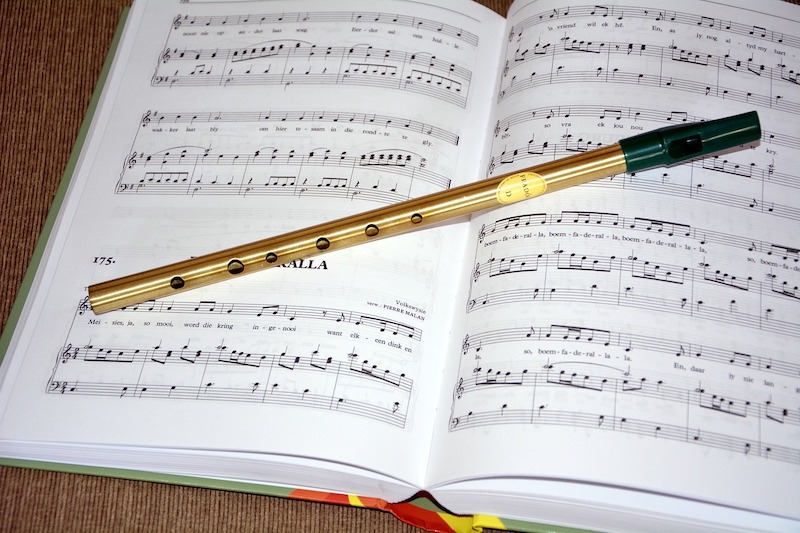
Envision yourself in the middle of a lively music session. Musicians are passionately playing their instruments, completely immersed in the rhythm and the melody, all without a single sheet of music in sight. Isn’t it impressive?
What if the key to learning Irish music isn’t playing the same notes over and over? There’s a well-kept secret among seasoned Irish musicians, and we’re pulling back the curtain in our latest blog post. Discover why repetition might be holding you back and how innovative methods like rhythmic variations and melody building blocks can revolutionise your learning process. These strategies will not only enhance your ability to memorise but also deepen your connection to the music. Unlock the secret here and transform your musical journey.
From Inception to Irish Session: Embed Irish Tunes in Your Memory
As you well know, trad music is an aural tradition that has been passed from one generation to the next by ear, requiring musicians to master the art of learning and memorising music. If you’re new to this vibrant world of Irish trad music, you might be wondering, “how am I supposed to memorise all these tunes?” I am thrilled to reveal that this blog post is designed to unlock the secrets of learning by ear.
Trad musicians commonly learn tunes by listening to a piece played several times over, and simply repeating the melody as they hear it. Of course this skill takes time to develop, and it helps if you’ve been immersed in the tradition for some time.
There are a few tried and tested techniques that I’d like to share with you today.
This blog will provide you with:
- Revolutionary techniques that challenge the common wisdom of repetition learning, introducing innovative exercises like rhythmic variations and tempo adjustments.
- Exercises that allow you to truly understand and feel the melody beyond the notated notes, using innovative exercises such as Melody Building Blocks and Silent Practice.
- Strategies to internalise the music, making it an inseparable part of you. Singing the tunes, for instance, is a powerful tool in this regard, even if you’ve never considered yourself a singer.
- Pragmatic advice on pacing your learning process by breaking down the tunes into manageable, digestible sections for focused practice sessions, leading to more productive learning.
So if you want to master the art of playing from memory, and ultimately, playing by ear, keep reading to learn the tricks of the trade.
Rule #1: Repetition is Redundant
A controversial statement indeed, but allow me to explain…
You’ve probably found up until now that if you asked a more seasoned musicians for advice on how to quickly and easily memorise a tune that you were told to simply “play through it a few times”. Sadly this technique doesn’t work for everyone. After all, if it was that easy no one would be facing any challenges in accomplishing this task!
One important thing to remember when you’re practising is that change is good. Breaking patterns is good for the learning process.
What do I mean in this context? Here’s an example of an exercise that I’ve found to be incredibly helpful that’s suitable for all musicians:
Rhythmic Variations
- Take a small section of the tune, no more than 4 bars, and play the melody as notated.
- Replay the melody, ignoring the given rhythm and instead applying a new rhythmic pattern of long – short – long – short. Don’t worry about where the pitches are falling according to the original melody and rhythm – I promise there’s a method to my madness.
- Replay the section, alternating our new rhythm pattern to short – long – short – long (yes, there’s a difference).
- Return to the original rhythm and play the tune as notated.
By making these small changes along the way we’re giving our brain new points of interest and forcing it to take note of different elements of the melody. Our fingers are still developing that all important muscle memory but our brains are engaging in a totally new way. Most importantly, we’re not becoming bored by simple repetition.
It’s also helpful to practise at different tempos – fast, slow, a more moderate pace – with and without a metronome.
Rule #2: Understanding the Melody
By developing an understanding of the melody – its shape, intent and unique phrasing as well as the flow and direction of the tune, you will achieve far more than simply playing the notes on the page.
How do you develop this understanding? By shaking things up a little. This tried and tested exercise is perfect for musicians of any age or ability:
Building Blocks: Shaping The Melody
- Play through the melody, slowly as written/notated (with a metronome is best practice).
- Play through the tune again but this time play only the first note of each bar. Hold this first note for the duration of the bar (for example if you’re playing a jig, we will hold the first note of the bar for 6 beats) and play through the entire tune using this method.
- Return to the beginning, this time adding in the note which occurs on the second strong beat of the bar.In a jig this will be the first note of the second grouping of three notes. In a reel this will be the first note of the second grouping of four notes. Check out my handy diagrams below for clarification.JIG – MELODIC BUILDING BLOCKS EXERCISE – THE KESH

REEL – MELODIC BUILDING BLOCKS EXERCISE – THE RED HAIRED LASS
 Bonus Steps:
 - Record yourself playing Step 2 or 3. Return to the beginning of the tune and play the melody alongside your recorded sustained notes. This will help your brain to identify the important notes within the tune, piecing together the building blocks that make up the melody, and identifying its shape and direction. It also helps your brain to take note of any “unusual” notes that occur within a phrase, such as an unexpected accidental.
Rule #3: The Sound of Silence
Any music teacher worth their salt will stress the importance of listening to as much music as possible as a student. One of the most important benefits to this seemingly simple task is developing an inner voice – or the ability to hear the music in your head.
“Silent practice” is an incredibly useful way of developing muscle memory in your fingers while developing this internal aural skill. So how do you do it? If you play the accordion or concertina you can hold down the air button while you press the keys – holding the air button down means the notes won’t sound. For fiddle or string players, you can fret the notes on the fingerboard without bowing or strumming, while flute and whistle players can simply cover the toneholes without blowing into the instrument.
While you practice silently, it’s important that you can hear the notes in your mind – singing along silently as you play.
This brings me to my next tip…
Rule #4: Sing Your Heart Out
Whatever your instrument of choice may be, and whether you consider yourself a singer or not, singing out loud is an incredibly useful tool when it comes to memorising tunes.
If you can hum, sing, whistle or lilt a tune from start to finish you’re already well on your way to having memorised the full piece. So once you’ve finished your silent practice, it’s time to let that voice of yours ring out and sing along as you play through the notes. This will help you to internalise the melody.
Rule #5: Don’t Bite Off More Than You Can Chew
If you want to beat the boredom of repetition then slogging through a whole tune in one go can be counterintuitive. Don’t set yourself up for failure by trying to memorise a whole tune in one go. Work on small sections at a time, or even focus on the trickier phrases first.
You can even break your learning up into bitesize pieces throughout the day if you’d prefer – short, focused practice sessions are much more productive than long, meandering ones where you lose focus halfway through. You want your brain to be active and engaged throughout.
Most importantly, don’t be too hard on yourself along the way. Practice should be fun and rewarding, not a cause of stress!
Feeling inspired? Why not browse our selection of traditional Irish musical instruments?
Share your thoughts
I've been playing music for 60 years and that is one of the best pieces on how to learn tunes I've ever read. Thank you.
Praise indeed, Kieron! Thank you for taking the time to comment and I'm delighted you've found the tips so useful.
Thank you for this wonderful advice on memorising which I have been working on for many years! This tutorial is a great help. I especially like the section on melody building blocks.
Thank you Marcia. I'm so glad you find it helpful.
Some interesting ideas there, that I never heard before.. I've been playing for many years but I'm always up for a few new ways of helping the memorising business, which does fade a little with age! Thanks..
I hope these ideas help you out Paul!
Super breakdown of an effective approach. The challenge with trad music is that the melodies don't typically have breaks: one keeps playing throughout. This is in contrast to classical, where there are resets or marked changes in tune, chords, mood, etc.; or pop music, where the melody is marked by lyrics, which are broken up into verses, chorus, and sometimes bridge. I think we tend to fixate on the pieces to memorize them, without thinking about what we're doing (or how we're doing it). Taking the same technique, intentionally breaking it down, and applying it to trad is a terrific idea. Thanks for this!
I'm glad you find it helpful Gary. You're so right - there's a huge contrast between the structure of Irish folk tunes and classical repertoire. The continuous flow of the music leaves little time to think about what's coming next, hence the importance of memorisation.
This is super interesting! So many ideas I’ve not encountered before and am eager to try out. Thanks!
I hope they work for you Karl. Very best of luck!
This was a very useful and helpful post. Along the way, I have probably used each of these ideas to learn and memorize a tune or any piece of music really, but it is quite helpful to have strategies listed like this, so that we have a way to purposefully go about it. What I have found challenging about memorizing Irish session tunes is the sheer enormous quantity of tunes out there. Since I did not grow up hearing them, and only really started focusing on playing them for the last 4 years, the sheer amount to learn is daunting. So, I figure I will just work on the tune that is in front of me right now, and do what I can to get it. I think another important thing is to go back and keep returning to the list of what was learned already. Another thing I might do is if I go to a session, I will introduce one of the new tunes I learned to everyone so that I can use it in the context of an actual performing situation. If I know I am going to show it to everyone, I have to have it well learned and ready to go!
A very important point indeed Paul. Once you've memorised a tune it's important to keep playing it regularly. As you said, revisiting previously learned tunes will help to keep them fresh. Muscle memory helps a lot with this I've found!
Although our session group plays only the occasional Irish tune and focuses more on AmTrad, these tips are incredibly useful for any musician who wants to move from "paper trained" to playing by ear or memory. Folk music lacks the rigid constraints of orchestral music, and the caller may vary tempo or call a non-traditional key. I hope you don't mind my sharing this with a couple of folks who are currently trying to make the move.
Share away Charles, I would be very happy for you to pass this information on to others - especially if you find it helpful! It can be a big change for musicians alright, moving from sheet music to aural music learning and performing from memory. I've found some older musicians in particular can be a bit flustered or embarrassed if they find themselves struggling with this transition, but as you said, there's a lot of moving parts and varying factors.
Thank you very much for this contribution! This is very valuable advice!
Thanks Stephen - I'm so glad you found it to be of use.
Hi there, Paraic, Some great tips here! I also find that it’s much better to go through two bars or perhaps even just one bar at a time and record myself. When I go through the whole tune, I find that some notes aren’t given their true value, or the fingering isn’t clean, as I’m rushing to get on to the next part. I think playing individual sections gives you confidence too - you tend to say to yourself “Well, at least I’ve ironed out that bit!” And you and I both know how it sounds when bits are NOT ironed out. Best wishes
It sounds like you've developed a good system there Douglas. Recording yourself is one of the best ways to identify any mistakes you might be making. Our brains are funny things that can gloss over errors while we're playing - we may not even notice them.
This is super helpful! Thank you so much.
You're very welcome Julie. I'm glad you found it helpful!
Thanks for writing this well-thought out and informative post. I’ll be referring students to read it - the streps cover all they key elements of memorization, with clear instructions. So happy you posted this!
Hi Joanne, very happy you've found it useful.
These are great!! Singing it out is solid idea! I’ve always tried to listen to a tune until it’s in my brain. For folks lucky enough to be raised around the music they were unwittingly packing them away for the future. Not me, unfortunately. I spend