
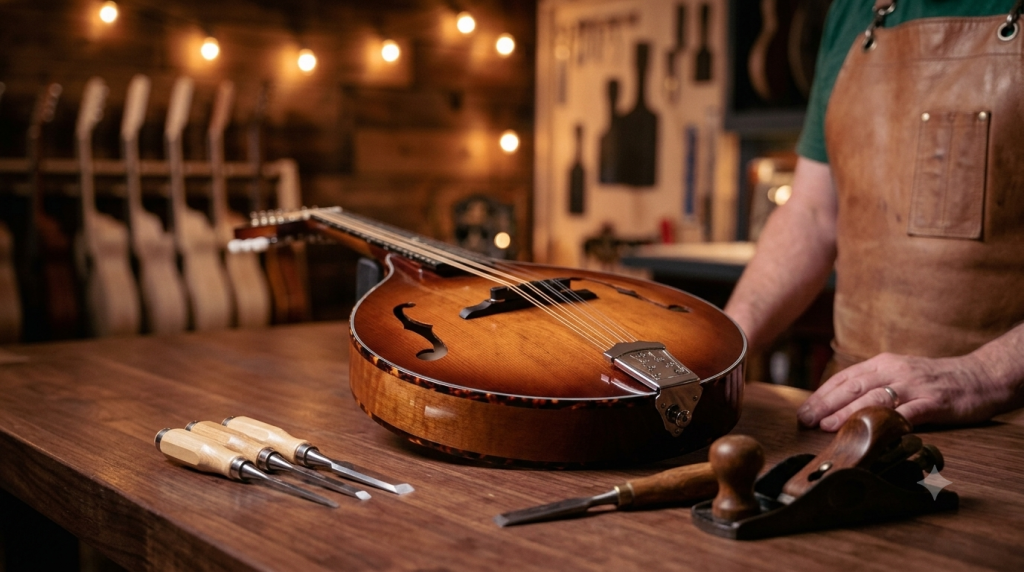
Learning the mandolin is an exciting musical journey. Because of its bright, punchy tone and distinct double-string design, it brings a vibrant texture to traditional Irish music, bluegrass, and folk genres. However, many novice players accidentally develop bad habits that slow down their technical progress, cause physical fatigue, or impact their overall tone.
Identifying these early obstacles helps you build a solid foundation right from the start. By avoiding the most common technical missteps, you can transition smoothly into a confident musician.

How do I hold a mandolin pick correctly?
One of the first structural errors new players make relates to right-hand mechanics. Many beginners pick up a mandolin and hold the plectrum using the flat pads of their thumb and index finger, mimicking how they might hold a pen.
Holding a pick with the finger pads reduces your control and causes the plectrum to spin or slip during fast down-up picking patterns. It also forces you to grip the pick tightly to keep it steady, causing hand fatigue.
The Correct Plectrum Grip
To fix this technique, make a loose fist with your picking hand. Place the plectrum on the side of your index finger’s first knuckle, pointing outward. Lay your thumb flat across the top of the pick. This configuration creates a secure, natural clamping force. It allows the pick to strike the pairs of strings firmly without slipping, while keeping your forearm and wrist completely relaxed.
Why am I struggling with double strings?
Unlike a standard guitar, the mandolin features eight strings arranged in four pairs called courses. A common error is failing to treat each pair as a single string.
Beginners often pick too softly or with an incorrect angle, striking only the top string of the pair. This mistake produces a thin, weak sound and ruins the characteristic chorus-like resonance of the instrument.

Executing a Full Stroke
When playing a melody or executing a chord strum, your plectrum must travel all the way through both strings in the course. Focus on clean, deliberate downstrokes and upstrokes that treat the pair as one physical entity. Practicing open-string exercises slowly with a metronome can help train your right hand to push through both strings evenly.
Am I using the wrong hand position for mandolin chords?
Many individuals come to the mandolin after playing the acoustic guitar. This transition often introduces an incorrect fretting hand angle. On a guitar, players typically position their hand with the neck resting deep in the web between the thumb and index finger, placing the fingers parallel to the frets.
Applying this guitar habit to the mandolin restricts your reach and speed. The mandolin has a much shorter scale length and a narrower fretboard, requiring a hand position that closely mimics fiddle technique.
Guitar-style Grip (Incorrect) –> Neck flat against palm, fingers parallel to frets.
Fiddle-style Grip (Correct) –> Neck angled across base of fingers, thumb pointing up.
Adjusting Your Left Hand Angle
To fret notes cleanly, angle your hand so the neck rests against the base of your index finger rather than deep in your palm. Your thumb should rest on top of the neck, pointing slightly toward the headstock. This position naturally angles your fingers across the fretboard, allowing you to cover two frets per finger and execute clean chord transitions with less stretching.
Why is hand tension slowing down my progress?
It is natural to feel awkward when learning a new instrument, but letting that awkwardness turn into physical tension will stall your technical progress. Beginners often squeeze the neck tightly with their left thumb to fret notes, or clench their right fist when trying to play faster melodies.
Excessive tension causes two main problems:
- Tonal issues: Pressing too hard on the strings can pull the notes sharp and cause painful finger cramping.
- Speed barriers: Tense muscles cannot move quickly. A rigid wrist stops you from executing smooth, rapid alternate picking.
You only need enough pressure to press the string firmly against the metal fret wire. Keep your wrist fluid and loose, allowing it to act like a hinge while your picking forearm moves naturally.
Am I turning the wrong peg when tuning?
With eight strings packed onto a relatively small headstock, the mandolin tuning layout can look confusing to a beginner. A frustrating mistake is turning a tuning machine peg while plucking a different string.
Because you cannot hear the pitch changing on the string you are turning, it is easy to keep twisting the peg until the string snaps.
[Peg 1] —> Plucking String 1 (Correct)
[Peg 1] —> Plucking String 2 (Incorrect – Risk of breaking String 1)
To avoid breaking strings, visually follow the wire from the bridge, past the nut, all the way to the corresponding post on the headstock. Pluck that specific string continuously while turning its peg so you can hear the pitch shift instantly.
Frequently Asked Questions
How do I choose a beginner mandolin that is easy to play?
Look for an instrument with a professional factory setup. High string action (the gap between the strings and the frets) makes an instrument incredibly difficult to play for beginners. Choosing an affordable, high-quality instrument from dedicated instrument collections ensures proper playability and build quality right out of the box. You can explore reliable options on the McNeela Instruments Beginner Mandolins page.
What is the best way for an absolute beginner to learn the mandolin?
Starting with structured, step-by-step instructional material prevents you from picking up bad physical habits. Following a method book designed specifically for novices helps you build your technique progressively, starting with simple melodies before moving on to complex chords. A highly recommended resource is the Absolute Beginners Mandolin Book, which provides clear guidance for your early practice sessions.
Building a Great Foundation
Mastering the mandolin requires patience, focused practice, and the right resources. By correcting your pick grip, relaxing your hands, and treating the double courses as single strings, you will avoid common pitfalls and progress much faster.
Pairing your practice with a well-constructed instrument and a reliable learning guide ensures your musical journey is smooth, rewarding, and fun. Explore top-tier starter models and training guides today to set yourself up for long-term success.




Share your thoughts