
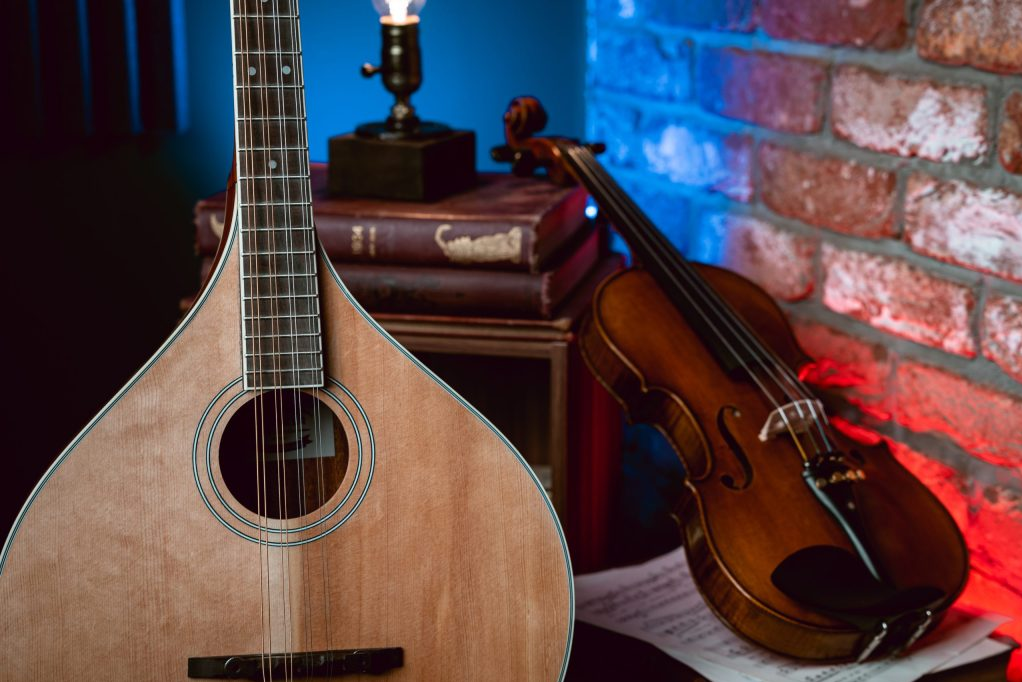
Irish music welcomes a wide variety of stringed instruments, but two of the most popular choices among modern players are the mandolin and the bouzouki. Both instruments have earned a respected place in sessions, recordings and performances, yet they serve different musical purposes.
If you are deciding between a mandolin and a bouzouki for Irish music, understanding their sound, role and playing style will help you make the right choice.
What Is a Mandolin?
The mandolin is a small, eight-string instrument with four pairs of strings tuned in fifths: G-D-A-E. This tuning is identical to the violin, making it particularly well suited to playing traditional Irish melodies.
In Irish music, the mandolin is valued for its bright, clear tone and quick response. Its compact size and familiar tuning make it an accessible option for beginners while still offering plenty of depth for experienced musicians.
A quality Irish mandolin provides excellent note definition, allowing reels, jigs and hornpipes to be played with clarity and precision. Because it focuses on melody playing, the mandolin is often chosen by musicians who want to lead tunes within a session.
What Is an Irish Bouzouki?
The Irish bouzouki evolved from the Greek bouzouki and was adapted for traditional Irish music during the twentieth century. Irish musicians modified the instrument to suit accompaniment and rhythmic playing styles, creating a distinctive sound that is now closely associated with folk music.
An Irish bouzouki typically features a longer scale length and a larger body than a mandolin. Common tunings include G-D-A-D or G-D-A-E, depending on the player’s preference and musical approach.
The instrument produces a rich, resonant tone with strong sustain. Rather than focusing primarily on melodies, the bouzouki often provides harmonic backing and rhythmic support for other instruments.
Its ringing chords and dynamic accompaniment have become a defining feature of many modern Irish folk ensembles.
How Does the Sound of a Mandolin Compare to a Bouzouki?
Mandolin Tone Characteristics
The mandolin produces a bright, focused sound with strong note separation. This makes it ideal for fast traditional tunes where every note needs to be heard clearly.
Players often appreciate the mandolin’s ability to cut through the sound of a busy session. Its crisp attack helps melodies remain distinct even when several musicians are playing together.
Bouzouki Tone Characteristics
The bouzouki creates a warmer and more sustained sound. Chords ring out longer, producing a fuller musical texture.
Rather than emphasising individual notes, the bouzouki excels at creating rhythmic patterns and harmonic accompaniment. This makes it particularly valuable in group settings where supporting the melody is the primary goal.
Which Sound Suits Irish Music Best?
Both instruments suit Irish music exceptionally well. The choice depends largely on whether you prefer playing melodies or accompanying other musicians.
If you enjoy performing the main tune, the mandolin is often the stronger choice. If you prefer creating rhythmic backing and adding depth to a group’s sound, the bouzouki may be the better fit.
Is a Mandolin or Bouzouki Easier to Learn?
For many beginners, the mandolin offers a gentler introduction to Irish music.
Its shorter scale length means stretches between notes are smaller, making fingering patterns easier to learn. The violin-style tuning also provides access to a vast range of traditional learning materials.
The bouzouki can take longer to master because of its larger size and longer neck. However, guitar players often adapt quickly due to the instrument’s chord-based role and similar accompaniment techniques.
Neither instrument is inherently difficult, but your previous musical experience may influence which feels more natural.
What Role Does Each Instrument Play in an Irish Session?

Mandolin as a Melody Instrument
In traditional Irish sessions, the mandolin is primarily used to play melodies. Reels, jigs, slip jigs and hornpipes can all be performed effectively on the instrument.
Because its tuning mirrors the fiddle, many traditional tunes transfer naturally to the mandolin.
Players who enjoy learning extensive tune repertoires often find the mandolin especially rewarding.
Bouzouki as an Accompaniment Instrument
The Irish bouzouki is known for providing accompaniment rather than leading melodies.
Using chord voicings, drones and rhythmic strumming patterns, bouzouki players support the tune while adding texture and energy to the overall performance.
In many contemporary Irish folk groups, the bouzouki serves as a bridge between rhythm and harmony, helping to create a fuller ensemble sound.
How Do You Choose Between a Mandolin and a Bouzouki?
When deciding between the two instruments, consider your musical goals.
Choose a mandolin if you:
- I want to play traditional Irish melodies.
- Are new to Irish music.
- Prefer a smaller instrument.
- I enjoy learning reels, jigs and hornpipes.
Choose a bouzouki if you:
- Enjoy accompaniment and rhythm playing.
- I already play guitar or other chordal instruments.
- I want to support singers and session musicians.
- Prefer a richer, sustained sound.
Many Irish musicians eventually play both instruments, using each where it is most effective.
Frequently Asked Questions
Can a beginner learn Irish music on a bouzouki?
Yes. While many beginners start with a mandolin, the bouzouki can be an excellent choice for players interested in accompaniment and rhythm.
Is the mandolin used in traditional Irish music?
Absolutely. The mandolin has become a well-established instrument in Irish traditional music and is widely used in sessions and performances.
Which instrument is better for playing reels and jigs?
The mandolin is generally preferred for playing melodies such as reels and jigs because of its tuning and clear articulation.
Can mandolin players switch to bouzouki easily?
Many mandolin players transition successfully to bouzouki. Familiarity with stringed instruments often makes the learning process straightforward.
Conclusion
The debate between mandolin and bouzouki is not about which instrument is better. Instead, it is about which instrument best matches your musical ambitions.
The mandolin excels as a melody instrument, offering clarity, precision and accessibility for traditional Irish tunes. The bouzouki provides rich accompaniment, rhythmic drive and harmonic depth that enhance group performances.
Both instruments play an important role in Irish music, and both can provide years of enjoyment and musical growth.
Ready to begin your Irish music journey? Explore McNeela Music’s collection of mandolins and bouzoukis to find the instrument that suits your style and goals.


Share your thoughts